SN education

Sunday, August 23, 2020

What is graphene?


  • Graphene is a one-atom-thick layer of carbon atoms arranged in a hexagonal lattice. It is the building-block of Graphite (which is used, among others things, in pencil tips), but graphene is a remarkable substance on its own - with a multitude of astonishing properties which repeatedly earn it the title “wonder material”.
  • Graphene's main properties:

    Graphene is the thinnest material known to man at one atom thick, and also incredibly strong - about 200 times stronger than steel. On top of that, graphene is an excellent conductor of heat and electricity and has interesting light absorption abilities. It is truly a material that could change the world, with unlimited potential for integration in almost any industry.

    Potential applications:

    Graphene is an extremely diverse material, and can be combined with other elements (including gases and metals) to produce different materials with various superior properties. Researchers all over the world continue to constantly investigate and patent graphene to learn its various properties and possible applications, which include:
    • batteries
    • transistors
    • computer chips
    • energy generation
    • DNA sequencing
    • water filters
    • antennas
    • touchscreens (for LCD or OLED displays)
    • sollar cells

    Graphene is an exciting material that is getting a lot of attention - especially since the 2010 Nobel prize in physics went to Andre Geim and Konstantin Novosolev, who first isolated Graphene in 2004


Production of graphene:

Graphene is indeed very exciting, but producing high quality materials is still a challenge. Dozens of companies around the world are producing different types and grades of graphene materials - ranging from high quality single-layer graphene synthesized using a CVD-based process to graphene flakes produced from graphite in large volumes.
High-end graphene sheets are mostly used in R&D activities or in extreme applications such as sensors, but graphene flakes, produced in large volumes and at lower prices, are adopted in many applications such as sports equipment, consumer electronics, automotive and more.
Graphene products:

Several companies offer graphene and graphene based products. You may check our list of graphene related companies to find a company that offers the products you need.
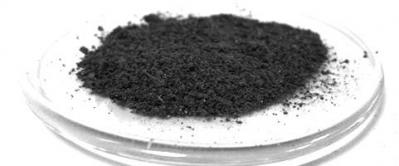
In December 2011 Vorbeck Materials said that the Siren anti-theft packaging device, which uses their graphene-based Vor-Ink circuitry (shown below) has started shipping - and this was the world's first commercially available product that is based on graphene.

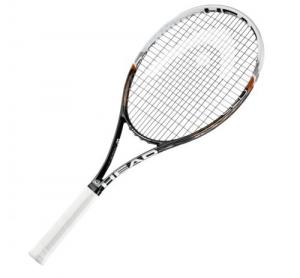
Today there are several more graphene products on the market. The sport industry was an early adopted, and as early as 2013 HEAD started shipping graphene-enhanced tennis rackets (called YouTek Graphene Speed series). Today one can buy graphene-enhanced helmets, ski equipment and even Lacrosse gear.
Graphene has also entered the consumer electronics market - for example Huawei's Mate 20 X smartphone, uses “graphene film cooling technology” for heat management purposes. Another high-profile company that adopts graphene is Ford - which is using graphene-reinforced foam covers for noisy components in its 2019 F-150 and Mustang cars. The graphene is mixed with foam constituents, and the resulting parts are said to be 17% quieter, 20% stronger, and 30% more heat-resistant
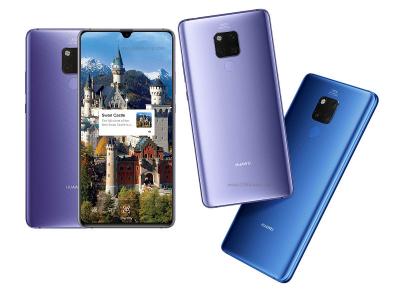
Huawei Mate 20 X image
An interesting market for graphene is the sensors market. In 2016 for example San Diego-based Nanomedical Diagnostics (now called Cardea) started shipping its graphene-based sensors and the AGILE R100 system which allows for real-time detection of small molecules. The graphene sensor offers faster sample processing, greater accuracy, portability and cost savings.
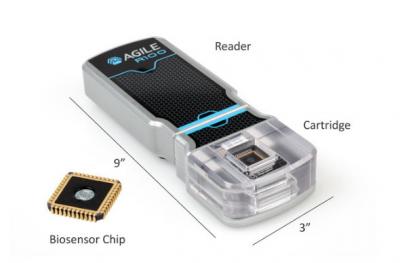
Nanomedical Diagnostics Agile R100 photo

Labels: , , ,

Saturday, July 4, 2020

WhatsApp features: How to read other's deleted message?

WhatsApp features: How to read other's deleted message?


WhatsApp, the most popular messaging app in the world, appeared in 2016 with a remarkable feature of Facebook's own app. And that feature is the option to delete the message. If you make a mistake or send a message to someone else, this feature is important enough. But when someone send you any message and delete that and you want to know the deleted message then what to do--
If someone deletes a WhatsApp message, the text that appears in the chat is 'This message was deleted. If you have an Android smartphone, you can read deleted messages again.

First download WhatsRemoved+ app from Google play store and after that install and open. Next set it up by accessing one request after another. Now select the app for which you want to save the notification. In other words, select WhatsApp from that list and then click on the next option on the next screen, tap on the allow button and then the saved files option will come up. And then the set up work will be completed. And the app will also be usable. From now on, all the notification that will came in WhatsRemoved+ app..

Labels: ,

Wednesday, June 24, 2020

All states of matter explained

The four fundamental states

Solid

Liquid

Gas

Plasma

Non-classical states

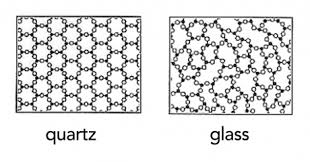
Glass

Liquid crystal states

Microphase-separated

Low-temperature states

Superfluid

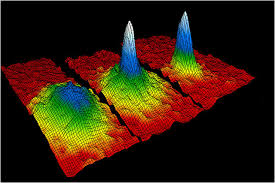
Bose–Einstein condensate

Fermionic condensate

Rydberg molecule

This latest discovery reveals a new state of quantum matter called a “Rydberg polaron,” a relatively giant particle containing many atoms that behaves in some ways like a single massive particle. ... These highly excited atoms were immersed in a gas that had been cooled to just a millionth of a degree above absolute zero.

Quantum Hall state

Photonic matter

Dropleton

High-energy states

Degenerate matter

Quark matter

Color-glass condensate

Other states

Supersolid

String-net liquid

Superglass

Labels: , ,

Thursday, June 18, 2020

Indian way to learn periodic table

Indian way to learn periodic table!


S-block
How to remember Alkali metal
  1. H-- hey
  2. Li-  li      
  3. Na- na
  4. K-- ka
  5. Rb- rubi
  6. Cs- sey
  7. Fr- friendship
How to remember Alkali earth metal
  1. Be-beta
  2. Mg-mangey
  3. Ca-car
  4. Sr-shirf
  5. Ba-bap
  6. Ra-raji
d-block
How to remember 3D
  1. Sc-suun
  2. Ti-tum
  3. V--vivah
  4. Cr-(k)carle
  5. Mn-mujhse
  6. Fr-fir
  7. Co-(k)cohi
  8. Ni-nehi
  9. Cu-(k)cahega
  10. Zn-(j)zanu
How to remember 4D

  1. Y--ye
  2. Zr-zindegi
  3. Nb-nehi
  4. Mo-mohobbat
  5. Tc--tumhari
  6. Ru--roh
  7. Rh--roh kar
  8. Pd--sukaiya
  9. Ag--aaj
  10. Cd--chadni
How to remember 5D

  1. Lf--last
  2. Hf--hof
  3. Ta--tai
  4. W--wrong (answer ke liye)
  5. Re-Reham(and)
  6. Os-Osamar
  7. Ir--idhar
  8. Pt--pitai
  9. Au--aur
  10. Hg--hogi
How to remember 6D
  1. Ac-accha
  2. Rf--Rafikul
  3. Db-debolina
  4. Sg-sagar(er)
  5. Bh--bhai
  6. Hs--hs(higher secondary) er
  7. Mt-moto
  8. Ds--duskor
  9. Rg--rog ke
  10. Cn--chinechilo?
P-block
How to remember group-13
  1. B-bapu
  2. Al-ali
  3. Ga-gaya
  4. In-India
  5. Tl-Thailand
How to remember group-14
  1. C--(k)cartick
  2. Si--sib
  3. Ge-ganesh
  4. Sn-saraswati
  5. Pb-parvati
How to remember group-15(nictogens)
  1. N--nani
  2. P--papa
  3. As-ashit
  4. Sb-sab
  5. Bi-bimar
How to remember group-16(chalcogens)
  1. O--osama
  2. S--says
  3. Se-sorry
  4. Te-to
  5. Po-police
How to remember group-17(halogens)
  1. F--faltu
  2. Cl-class
  3. Br-boring
  4. I--instructor
  5. At-attack
How to remember group-18(noble gas)
  1. He-hay
  2. Ne-na
  3. Ar-amir
  4. Kr-ka
  5. Xe-xerox
  6. Rn-rancho
f-block
How to remember Lanthanide elements
  1. Ce-cey
  2. Pr-prothom
  3. Nd-nondinir
  4. Pm-prem
  5. Sm-samne
  6. Eu-europian
  7. Gd-gadda
  8. Tb-tabole
  9. Dy-darale
  10. Ho-hobe
  11. Er-ar
  12. Tm-tumi
  13. Yb-ai bhabe
  14. Lu-lukoccho
How to remember Actinide elements
  1. Th-tahole
  2. Pa-parar
  3. U--upor
  4. Np-nojor
  5. Pu-police er
  6. Am-amon
  7. Cm-chilo (jate kono)
  8. Bk-bodmas
  9. Cf-chor
  10. Es-eshe
  11. Fm-faltu(nijeder)
  12. Md-moddhe
  13. No-na
  14. Lr-lorte pare
These elements are no needed to know--Nh, Fl, Mc, Lv, Ts, Og


VISIT THIS SITE ALSO--https://www.quora.com/What-is-the-Indian-way-to-learn-Periodic-table/answer/Suman-Naskar-86?prompt_topic_bio=1

Labels: