SN education

Friday, July 31, 2020

Top 5 deadliest creature in the world

Top 5 deadliest creature in the world:--

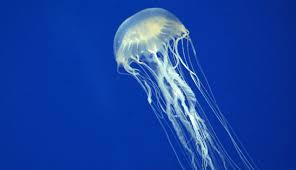
  1. Australian Box Jellyfish:
    Box Jellyfish are those animals that are probably the most beautiful to look at of all species of Jellyfish. Its form is remarkable just like a transparent screen. This marine animal grows up to about 15 feet tall. That animal is now known as the most poisonous animal in the world. The amount of poison in a Jellyfish can kill up to 60 people. The poison attacks the heart, nervous system and skin cells. It can kill anyone within 3 minutes. 
  2. Cone snail:
    Snail can become a serious poisonous creature. In fact the general snail is not toxic, but the Cone snail is most terrible. It is originally seen in Australia's hot saline marine water. 
  3. Black Mamba:
    The world's fastest and deadliest venomous snake is the Black Mamba. The most violent they are, the most crowdy they are. They attack the opponent only when they are terrified. There are many stories about them in ancient Africa. The Black Mamba is found in the highlands of South and East Africa. The average length is 6.2 feet. However, 18 feet Mambas have been found. Their speed is up to 25 km/h. Black Mamba can kill a elephant in a single bite. 
  4. Cape Buffalo:
    It looks like an innocent, wondering animal in the grassland. But they are one of the deadliest animals in the world. A Cape Buffalo's weight is up to a few tons. Their strength is their body weight and bad mood. If any one tease them, he is no longer safe. Experts say that their memory is very strong so they are extremely dangerous animals for humans. 
  5. Siafu Ants:
    There is a type of ant called Siafu ants, they are also called driver ants. Evidence of the existence of such ants has been found on Earth, not even today, but about 70 million years ago. They are found mainly in different parts of South America and Africa. They even kill many animals in just few times..

Labels: , ,

Sunday, July 19, 2020

Have you seen this kind of cockroach before?

It is hard to believe that Cockroach can't take such a strange looks. Researchers have discovered a new species of animal that has been searched for a long time in a part of the Indian Ocean in Bantan. The animal was first found in 2018 in the west java region of Indonesia. At first sight, it seemed as if the creature was wearing a helmet on its head, as if the star wars character Darth Vader. After nearly two months of research this month, Singapore have identified the animal as the new discovery, named "Bathynomus Raksasa", a giant sea cockroach. On July 8, scientific researchers submitted their report on this new species. It is published in the Biodiversity Research Journal "Jukeys". 
Bathynomus monster is a kind of giant creature. There are about 20 speciesin the body of the species of Bathynomus. It bears resemblance to crabs, lobsters and shrimps. They live in a very cool place in the heart of the ocean. This cockroach has 14 legs, and they walk in the depths of the sea in search of food. They have objects on their heads like helmets. At 50 cm in size, this sea cockroach is usually the largest at 33 cm. Researchers from the National University of Singapore, the research center for Oceanography, and the Indonesia Institute of Sciences have worked on this project. They have toured about 63 places for two weeks and have collected 12 thousand samples. Going deep into the sea they have brought innumerable 800 species of jellyfish, sponges, earthworms, snails, starfish and crabs. Of these 12 species are totally unknown to the researchers..

Labels: , ,

Saturday, July 11, 2020

How can the lips of a human look like the mouth of a trigger fish?

How can the lips of a human look like the mouth of a trigger fish?
At first I was scared. Absolutely battered lips, again with a gleam of white teeth peeking through the middle of it. It is as if the structure of the lips has been changed with a lot of money. But it is not a human, a fish. There is no harmony of face with body. Everyone is naturally shocked to see the lips and teeth of such a person in the body of a fish. The picture has also gone viral on social media at the moment. It is known that the type of fish is called trigger fish. This fish is commonly found in many sides of southeast Asia. Two colors on the body of the fish and a line of red color dividing the two colors. The red line extending from the upper part of the lips to the lower part of the body.

Many people have described such fish as unbelievable and strange on social media. It is hard to believe how many things are hidden in nature without seeing them with one's own eyes. Such a mystery of nature has been found in Malaysia. Exactly according to human opinion, teeth and lips are placed on the upper part of the body of the fish.
Many environmentalists referred to the image as a distorted. 
After the picture of that fish was published on social media, many people have started pasting it through photoshop to make it more popular.. 

Labels: , ,

Friday, June 26, 2020

why dogs have strong sense of smell?

Dogs’ sense of smell is essentially what sense of sight is to humans. Dogs interpret the world through their nose, as compared to humans, who are dependent on their sight to see the world.

Comparing Dog Nose and Human Nose

When we try to smell something, we inhale air with our nose and we use the same passage in our nose to exhale that air. Therefore, all the smell that we get when we are inhaling is lost when we exhale that air. However, a dog has two different air passages, one for breathing and another for smelling. This means that dogs are able to store the smell in their nose even while breathing out the air!
When dogs exhale, they send air out through the slits of their nose, but the manner in which this air is exhaled through their nose helps the dogs to draw in new odor molecules. This also helps dogs capture more smells when sniffing.
You must have noticed that dogs’ noses are always wet, but have you ever wondered why? The mucus on the dog’s nose helps it smell by capturing scent particles. A dog also has the ability to smell independently from each nostril, this helps the dog to understand from which direction the smell is coming.
The passage through which dogs smell the air contains highly specialized olfactory receptor cells, which are responsible for receiving smells. A dog contains about 225-300 million smell receptors, as compared to just 5 million of these receptors being present in a human nose.

Comparing Dog Brain and Human Brain

By now, we clearly know that dogs have a nose that can smell about 1,000-10,000 times better than a human, but how are dogs able to remember all the different smells that they have sensed throughout their life?
The answer lies in the difference between the brains of dogs and humans. A human brain has a larger visual cortex than dogs, whereas a dog’s brain has a much larger olfactory cortex than humans. The visual cortex is responsible for processing visual information, whereas the olfactory cortex is responsible for processing the sense of smell. A dog’s olfactory cortex is about 40 times larger than that of a human.

Dog’s sense of smell

Dogs contain another special olfactory system above the roof of its mouth called the vomeronasal organwhich helps dogs sense things that they cannot see, such as human emotions. A dog can tell if a person is sad or happy, and this also helps dogs know whether an animal is friendly or dangerous to them. This unique ability also helps them identify potential mates.

The power of the canine sense of smell is unique and has helped humans in a number of ways. A dog can feel if a person is sick or sad, and can even identify if someone is pregnant. With proper training, some dogs can even be trained to detect bombs. They can sense the emotions of humans and react appropriately in a time of need, and they also have been able to help in the early detection of cancer in humans, essentially saving the lives of their owners.

Labels: ,

Sunday, June 21, 2020

How Do Chameleons Change their Colors?

How Do Chameleons Change their Colors?

Chameleons mostly change color to regulate their temperatures or to signal their intentions to other chameleons.
The outermost layer of the chameleon's skin is transparent. Beneath this are several more layers of skin that contain specialized cells called chromatophores. The chromatophores at each level are filled with sacs of different kinds of pigment. The deepest layer contains melanophores, which are filled with brown melanin. Atop that layer are cells called iridophores, which have a blue pigment that reflects blue and white light. Layered on top of those cells are the xanthophores and erythrophores, which contain yellow and red pigments, respectively.

Normally, the pigments are locked away inside tiny sacs within the cells. But when a chameleon experiences changes in body temperature or mood, its nervous system tells specific chromatophores to expand or contract. This changes the color of the cell. By varying the activity of the different chromatophores in all the layers of the skin, the chameleon can produce a whole variety of colors and patterns.
For instance, an excited chameleon might turn red by fully expanding all his erythrophores, blocking out the other colors beneath them. A calm chameleon, on the other hand, might turn green by contracting his erythrophores and allowing some of the blue-reflected light from his iridophores to mix with his layer of somewhat contracted yellow xanthophores.

With these layers of cells, some chameleons are capable of producing a dazzling array of reds, pinks, yellows, blues, greens, and browns.

Labels: ,

Friday, June 19, 2020

Why animal’s eyes glow in the dark?

Why animal’s eyes glow in the dark?


When you are going somewhere in the night and suddenly an animal comes in front of you then you might have noticed that animal’s eyes shine in the dark. Such as dogs, cats, lions, leopards etc.

Sometimes the body of the animal is not visible due to darkness but his eyes look glowing. Have you ever thought why this happens, why some animal’s eyes shine in the dark? Let's study through this article.
Why eyes of some animals shine in the dark?
Eyes of some animal's shine in the night because they have a special type of reflective layer behind the pupil of their eyes known as Tapetum Lucidum which enhances the amount of light absorbed by the photoreceptors in their eyes.
It can also be understood that this layer reflects the light and due to this only animal's can easily see things in the dark.
Glowing of an animal's eye is an advantage for us. When we go for an outing or cross the road and suddenly an animal passes, we didn't come to know if his eye won’t shine. Isn't it?

what is Tapetum Lucidum?
Tapetum Lucidum is a reflective layer of tissues found in the eyes of some vertebrates like cats, dogs etc. and some animals that do not have spinal cord i.e. invertebrates. This layer is located at the back of the retina in the eyes of the vertebrates.
The main function of this reflective layer is to increase the light that is available to the photoreceptors in the eyes. Do you know what are photoreceptorsThey are special neurons in the retina that convert visible light by absorbing photons of light into the signals that can sometime set the biological processes in the body.
In our eyes, we know that there are two cells, namely rods and cones that help us to see colours and provide visibility at night. These cells are basically two photoreceptors out of the three found in the eyes of mammals.
In other words, we can say that, Tapetim Lucidum is like a mirror in the eyes of some animal's that make them shine in the dark.
Is Tapetum Lucidum has any colour?

Although the Tapetum Lucidum has its colour, the eyeshine shows luminous colours that seem to change when seen from different angles. So, its colour depends upon the minerals from which Tapetum Lucidum is made. The most common colours of the eyes of some animals that we see include whitish with a blue periphery (like in dogs), greenish (in tigers), golden or yellow (in cats) etc.
Therefore, we can say that in dark some animal's eyes shine due to the layer Tapetum Lucidum present at the back of the retina. It acts as retro reflector and reflect the incident light back to its original path. Both the reflected and original light mix together which gives photoreceptor another chance to absorb the light. Thus, produce a brighter image of the object and so, animals are able to see easily in the dark.

Labels: ,